Beyond the Open House: 5 Surprising Ways AI Employees Help Real Estate Teams Close Faster
December 15, 2025

The real estate game has changed. While most agents are still juggling phone calls, drowning in follow-up emails, and manually sorting through leads, top-performing teams have discovered something that's giving them an unfair advantage: AI employees that work 24/7 behind the scenes.
We're not talking about chatbots that give generic responses or basic automation tools. These are intelligent AI team members that handle complex workflows, analyze buyer behavior in real-time, and execute sophisticated sales strategies while human agents focus on what they do best: building relationships and closing deals.
The results speak for themselves. Teams using AI employees are reporting 50% faster response times, 70% increases in qualified leads, and some agents are closing 30% more deals with the same team size. Here's how they're doing it.
1. Lightning-Fast Lead Response at Peak Engagement Moments
The difference between converting a lead and losing them often comes down to minutes, not hours. When someone fills out a contact form at 11 PM on a Sunday night, their interest is at its absolute peak: and that's exactly when traditional real estate teams drop the ball.
AI employees eliminate this gap entirely. The moment a potential buyer submits an inquiry, an AI agent instantly responds with relevant property matches, schedules a viewing, and sends personalized neighborhood insights. No waiting for Monday morning, no missed opportunities.

"Speed isn't just about efficiency: it's about catching prospects at the exact moment when they're most motivated to buy."
This immediate response capability delivers a 300% increase in lead response speed compared to manual follow-up. But here's what's really surprising: AI doesn't just respond fast: it responds smart. By analyzing the inquiry details, browsing behavior, and similar successful conversions, it knows exactly what information to provide and what next steps to suggest.
Real estate teams using this approach report that prospects are more engaged, ask better questions, and move through the sales process significantly faster because they never experience the frustration of waiting for basic information.
2. Intelligent Lead Scoring That Identifies Ready-to-Buy Prospects
Not all leads are created equal, and AI employees know this better than anyone. While human agents might spend equal time on every inquiry, AI systems analyze dozens of behavioral signals to identify which prospects are genuinely ready to buy versus those who are just browsing.
The system tracks everything: how long someone spent viewing property photos, which neighborhoods they searched repeatedly, their budget consistency across inquiries, and even the time of day they're most active. This creates a comprehensive buyer intent score that helps agents prioritize their time effectively.
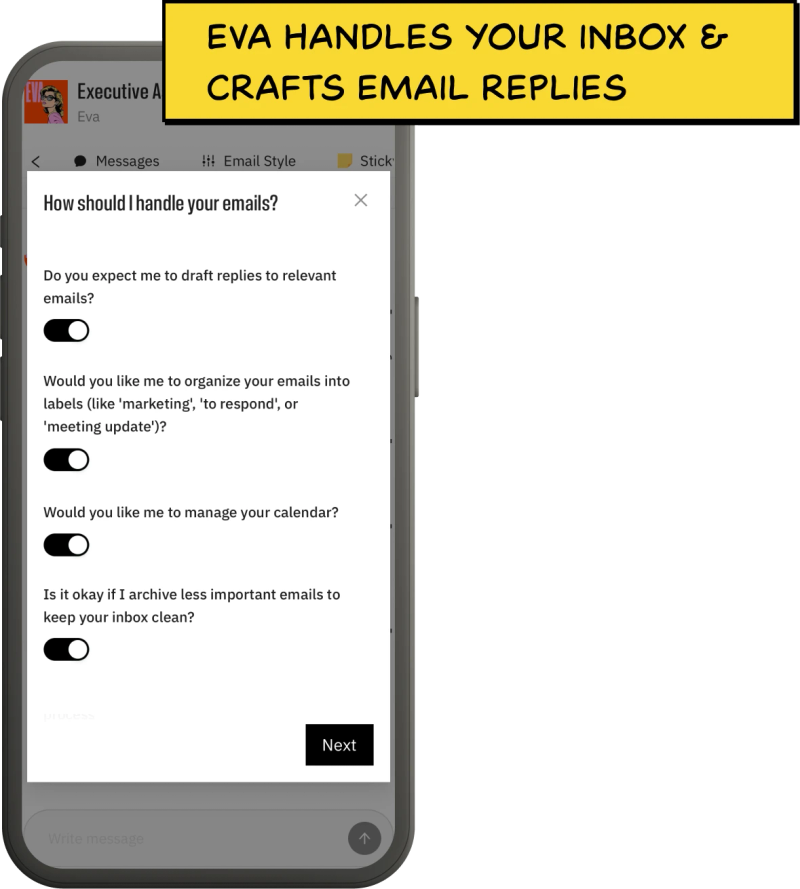
Here's a real example: When an AI employee like Eva processes inquiries, she might flag a lead who viewed three similar properties in the same price range, downloaded neighborhood guides, and submitted forms during business hours as "high-intent." Meanwhile, someone who viewed expensive properties far outside their stated budget gets categorized differently.
Lead Scoring Criteria Comparison:
| Traditional Method | AI Employee Analysis |
|---|---|
| Basic contact info review | 50+ behavioral data points |
| Manual gut-check scoring | Real-time predictive analytics |
| Same priority for all leads | Dynamic priority ranking |
| Reactive follow-up | Proactive engagement timing |
| 20-30% conversion accuracy | 85% conversion prediction accuracy |
This intelligent filtering produces a 70% increase in qualified leads because agents spend their time on prospects who are actually ready to move forward.
3. Personalized Property Recommendations That Feel Mind-Reading Accurate
Generic property suggestions are dead. Today's buyers expect recommendations that feel like they came from someone who truly understands their lifestyle, preferences, and unspoken needs. AI employees deliver this level of personalization at scale.
The system learns from every interaction: if a client consistently clicks on homes with large backyards but never mentions it explicitly, future recommendations emphasize outdoor space. If they always ask about school districts, even for properties without kids mentioned, the AI notes this preference and leads with educational information.
"The best recommendations don't just match what buyers say they want: they anticipate what they didn't know they needed."
This goes beyond simple matching. AI employees use predictive analytics to suggest properties that prospects might not have found on their own but are statistically likely to love based on their behavior profile. One agent reported a client who said they wanted a downtown condo but consistently engaged with suburban listings: the AI picked up on this pattern and suggested a suburban property that ultimately became their dream home.
4. Strategic Follow-Up Sequences Triggered by Real Behavior
Traditional follow-up relies on arbitrary schedules: call in three days, email next week, try again in a month. AI employees flip this approach entirely, sending communications based on actual prospect behavior rather than calendar dates.
When someone re-visits a property listing for the third time, that's an AI trigger for immediate outreach with additional photos or a virtual tour offer. If someone stops engaging entirely, the system waits for optimal re-engagement timing based on similar prospect patterns before sending a perfectly crafted "checking in" message.
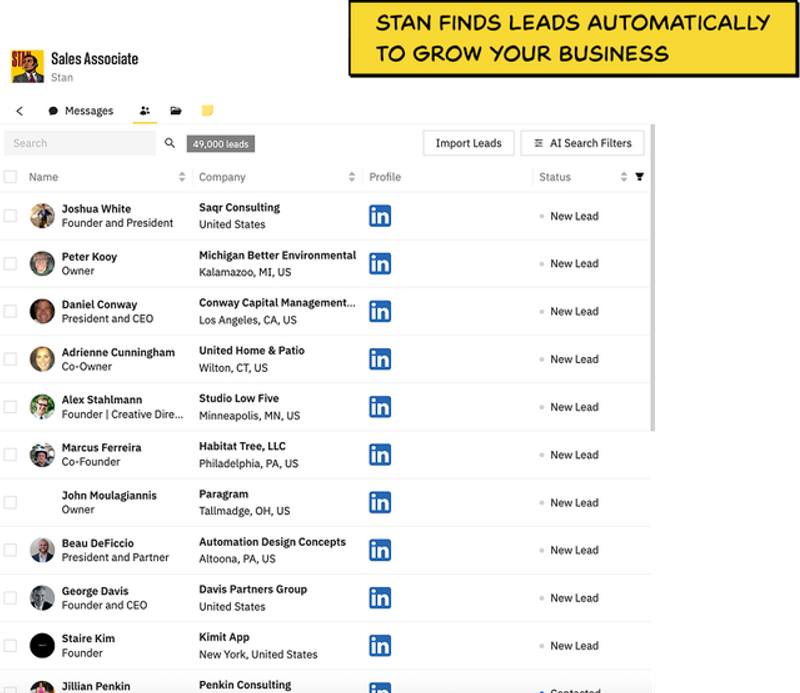
An AI sales associate like Stan tracks these behavioral triggers across hundreds of prospects simultaneously. He knows exactly when each lead last engaged, what they viewed, and what type of follow-up is most likely to re-activate their interest. This targeted approach means no leads go cold due to forgotten follow-ups, and every interaction happens at maximum engagement potential.
The system also personalizes follow-up content based on where prospects are in their journey. Early-stage browsers get neighborhood guides and market insights. Serious shoppers receive comparable sales data and scheduling opportunities. Ready-to-buy prospects get immediate availability updates and pricing strategy discussions.
5. Massive Time Reclamation for High-Value Activities
Here's the most surprising impact: AI employees don't just make existing processes faster: they completely eliminate entire categories of time-consuming work, freeing agents to focus on activities that actually generate revenue.
The numbers are staggering. Real estate professionals using AI employees report saving 40-50 hours per week on administrative tasks. This includes lead routing, follow-up coordination, listing updates, email management, document processing, and calendar scheduling.
"When AI handles the reactive work, human agents become strategic dealmakers instead of administrative assistants."
Implementation Checklist for Real Estate Teams:
☐ Set up instant lead response system - Configure AI to respond within 5 minutes of any inquiry ☐ Implement behavioral lead scoring - Track 10+ engagement signals for priority ranking
☐ Create personalized recommendation engine - Build profiles based on viewing patterns and preferences ☐ Design trigger-based follow-up sequences - Map communications to specific prospect behaviors ☐ Automate routine administrative tasks - Hand off email management, scheduling, and lead routing ☐ Establish performance tracking metrics - Monitor response times, conversion rates, and time savings

One Austin realtor reported closing 30% more deals with the same team size after implementing comprehensive AI automation. Their conversion rates increased by 25% from lead to client while reducing time-to-close by 60%: all because agents could focus entirely on relationship-building and negotiation instead of chasing down basic information and managing endless follow-up tasks.
The transformation isn't just about efficiency: it's about elevating the entire client experience. When AI employees handle the reactive, high-volume work, human agents become strategic advisors who can dedicate proper time to understanding client needs, providing market insights, and skillfully navigating complex negotiations.
The Competitive Reality
Teams that adopt AI employees aren't just getting slight improvements: they're operating in a completely different league. While traditional agents are still processing yesterday's leads manually, AI-powered teams are nurturing hundreds of prospects simultaneously, responding instantly to engagement signals, and closing deals that would have been lost in the administrative shuffle.
The real estate market waits for no one. Buyers have options, and they'll work with whoever responds fastest, understands them best, and makes the process seamless. AI employees make this level of service possible at scale, turning what used to be premium, boutique-level attention into the standard experience for every single prospect.
Everything above runs on AI employees. To see the standalone tools that do the same jobs, and what they cost, check our breakdown of AI tools for real estate agents.
The question isn't whether AI will transform real estate: it's whether your team will lead that transformation or get left behind by competitors who embrace these tools first.