Why AI Employees Are a Game Changer for the Real Estate Industry

Ulric Musset
CEO, Marblism
December 12, 2025

Real estate has always been about relationships, negotiations, and closing deals. But let's be honest: you're probably spending more time on administrative tasks, lead qualification, and social media management than actually selling properties or building client relationships.
If you're like most real estate professionals, you're juggling dozens of leads, scheduling countless showings, nurturing prospects through months-long buying cycles, and trying to maintain an active social media presence. Meanwhile, your inbox is overflowing, contracts need reviewing, and that promising lead from last week just went cold because you didn't follow up fast enough.
Here's the reality: In 2026, the most successful real estate professionals won't be the ones working the hardest: they'll be the ones working smartest with AI employees.
What Makes AI Employees Different from Traditional Real Estate Tools
Traditional real estate software gives you databases, CRMs, and scheduling tools. AI employees actually work for you. They don't just store information: they act on it, make decisions, and handle complete workflows from start to finish.
Think of AI employees as your always-on team members who never take sick days, don't need coffee breaks, and can handle multiple tasks simultaneously while you focus on what you do best: building relationships and closing deals.

"AI employees aren't replacing real estate agents: they're making great agents unstoppable by handling everything that doesn't require human judgment and relationship-building skills."
The Core AI Employee Use Cases Transforming Real Estate
| AI Employee Role | Primary Functions | Time Saved Weekly | ROI Impact |
|---|---|---|---|
| Executive Assistant | Email management, calendar scheduling, document organization, client follow-ups | 15-20 hours | 300% productivity increase |
| Sales Associate | Lead qualification, CRM updates, prospect research, pipeline management | 12-18 hours | 40% more qualified leads |
| Social Media Manager | Content creation, posting schedules, engagement, market updates | 8-12 hours | 60% increase in online visibility |
| Content Writer | Property descriptions, blog posts, market reports, email campaigns | 6-10 hours | 50% more marketing touchpoints |
Lead Generation and Qualification That Never Sleeps
Your AI sales associate can scan thousands of potential leads, cross-reference them with your ideal client profile, and deliver a prioritized list of prospects ready for your personal touch. Instead of cold-calling everyone, you're having warm conversations with pre-qualified leads who actually match your criteria.
Morgan Stanley Research found that 37% of tasks performed by real estate companies can be automated, potentially generating $34 billion in efficiency gains by 2030. Lead qualification alone represents a massive opportunity: imagine having a team member who can process hundreds of leads while you sleep.
Client Nurturing That Scales Infinitely
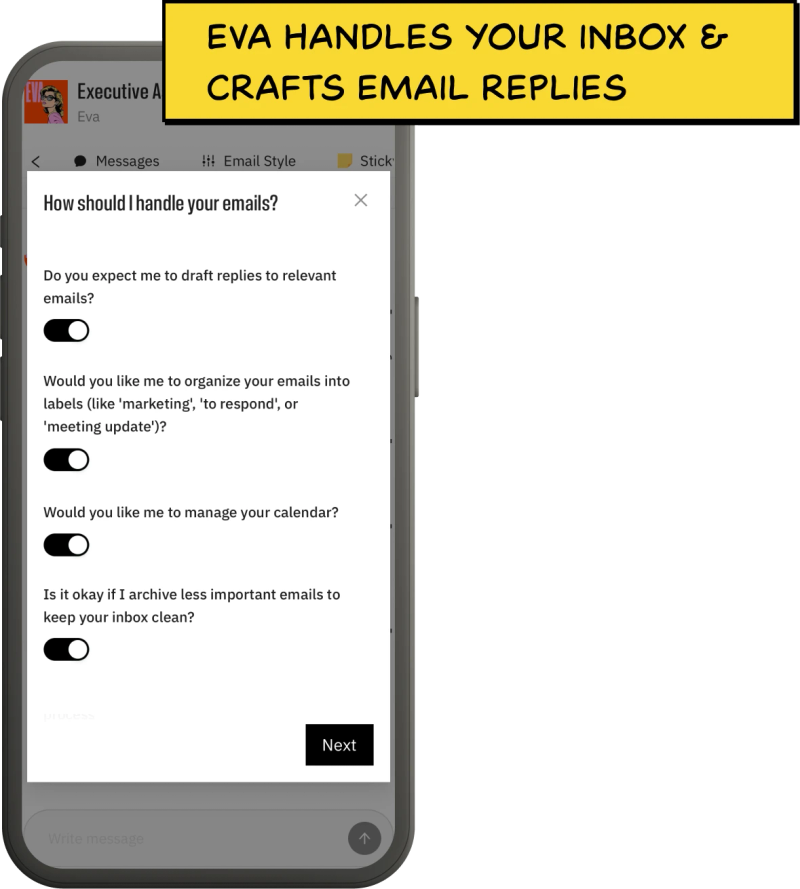
Your AI executive assistant can maintain personalized communication with hundreds of prospects simultaneously. It tracks their preferences, remembers their budget constraints, sends relevant property updates, and schedules showings: all while maintaining the personal touch that makes clients feel valued.
Real estate is a long-cycle business. Buyers often take 6-12 months to make decisions, and sellers might consider listing for months before acting. AI employees ensure no prospect falls through the cracks during these extended timelines.
Social Media Presence That Builds Your Brand
Consistent social media presence is non-negotiable in today's real estate market, but creating content daily while managing clients is nearly impossible. Your AI social media manager can generate market insights, create property showcases, share neighborhood highlights, and engage with followers: maintaining your professional brand even when you're busy with closings.
Each of those roles has a standalone tool too, if you would rather start with one. Our list of AI tools for real estate agents ranks them by the job they do.
The Productivity Revolution: What 40+ Hours Per Week Really Means
When you reclaim 40+ hours weekly from administrative tasks, you're not just getting time back: you're multiplying your earning potential exponentially.
Here's what most agents do with their recovered time:
- Double their client meetings (more relationships = more referrals)
- Expand into new markets (geographic or demographic)
- Improve deal quality (better preparation leads to better negotiations)
- Build strategic partnerships (more time for networking and collaboration)
"The agents who embrace AI employees aren't just working more efficiently: they're operating at a completely different level. While their competitors are stuck in administrative quicksand, they're building empires."
Scaling Client Service Without Scaling Stress
Traditional scaling in real estate means hiring assistants, training staff, and managing overhead. AI employees scale your capabilities instantly without the complexity of human resources management.
One agent using AI employees can provide the same level of service as a traditional team of 5-7 people, but with better consistency, 24/7 availability, and zero personality conflicts or sick days.

The Competitive Advantage: Why Early Adopters Win Big
AI is predicted to reduce tenant screening time by 75%: a game-changer for property managers and agents working with investors. While your competitors are spending weeks on due diligence, you're closing deals.
But the competitive advantage goes beyond speed. AI employees provide:
✅ Consistent follow-up (no leads slip through cracks)
✅ Data-driven insights (market trends, pricing optimization)
✅ 24/7 availability (international clients, different time zones)
✅ Perfect documentation (every interaction tracked and logged)
✅ Predictive analytics (identify which leads are most likely to close)
✅ Scalable personalization (customized communication for hundreds of clients)
Market Intelligence That Gives You the Edge
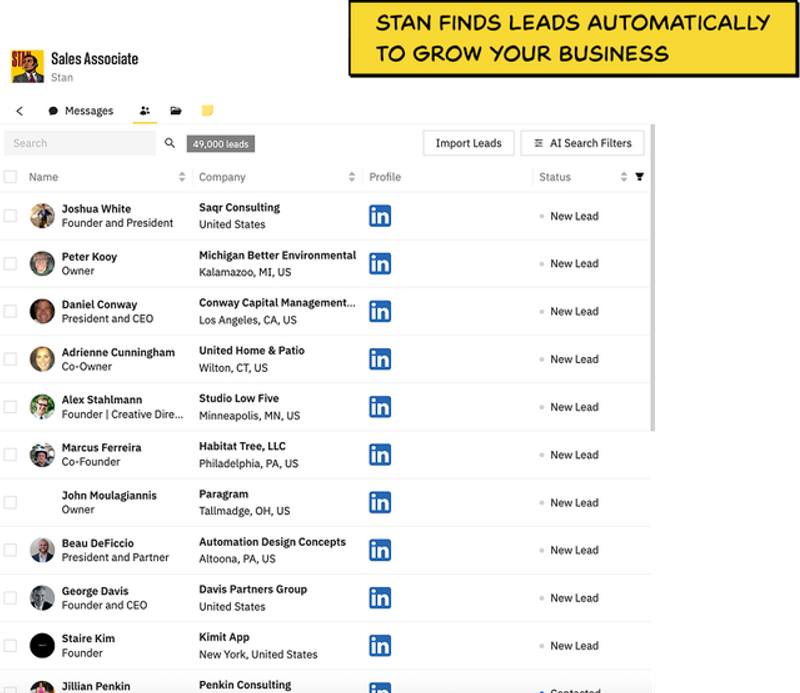
AI employees don't just handle tasks: they analyze patterns. Your AI team can identify market shifts, predict pricing trends, and alert you to opportunities before they become obvious to competitors.
Real estate companies using AI have achieved over 10% increases in net operating income through more efficient operations, stronger customer experiences, and improved asset selection.
Implementation: Your 30-Day AI Employee Integration Checklist
Getting started with AI employees doesn't require a complete business overhaul. Here's your step-by-step implementation plan:
Week 1: Foundation Setup
- Audit your current daily tasks (identify repetitive activities)
- Choose your first AI employee based on biggest time drain
- Set up basic integrations with existing tools (CRM, email, calendar)
- Define success metrics and tracking systems
Week 2: Initial Training and Testing
- Train AI employee on your communication style and preferences
- Test basic functions with non-critical tasks
- Establish feedback loops and refinement processes
- Create standard operating procedures for AI collaboration
Week 3: Gradual Responsibility Transfer
- Begin delegating routine tasks to AI employee
- Monitor performance and adjust parameters
- Gather client feedback on AI interactions
- Document what works and what needs improvement
Week 4: Scale and Optimize
- Identify next AI employee role to add
- Optimize workflows based on first month's data
- Plan expansion into additional use cases
- Calculate ROI and plan next phase
"The biggest mistake real estate professionals make is waiting for AI to be 'perfect' before they start. The agents winning today started experimenting six months ago, not when the technology became flawless."
The Future is Already Here (And Your Competitors Know It)
By 2026, AI employees won't be a competitive advantage: they'll be table stakes. The question isn't whether you'll eventually use AI employees, but whether you'll be an early adopter who helps define best practices or a late adopter struggling to catch up.

The most successful real estate professionals are already building their AI-powered teams. They're not replacing their human skills: they're amplifying them. While you're spending hours on administrative tasks, they're having more meaningful client conversations, closing more deals, and building stronger businesses.
The transformation is happening now. Real estate professionals using AI employees are reporting 300% productivity increases, 40% more qualified leads, and significantly better work-life balance. They're not working harder: they're working infinitely smarter.
Your clients expect faster responses, more personalized service, and deeper market insights. AI employees don't just help you meet these expectations: they help you exceed them consistently, at scale, without burning out.
The question isn't whether AI employees will change real estate: they already are. The question is whether you'll be leading that change or watching it happen from behind.