










_2026-03-03_16-46-01.webp)
It’s 11:00 PM on a Tuesday. You’ve just finished a twelve-hour sprint, your eyes are glazing over, and you realize you haven’t looked at your inbox since lunch. There are 142 unread messages. Three of them are potential leads, two are "urgent" requests from your current clients, and the rest is a chaotic mix of newsletters, spam, and meeting invites for slots you don't actually have free.
This is the "Founder’s Purgatory." You’re successful enough to need help, but you’re either too busy to train a human assistant or too protective of your margins to drop $60k a year on a full-time hire.
In 2026, the game has changed. The "Company of One" isn't just a dream anymore, it’s a scalable reality. Founders are ditching the traditional hiring pipeline and opting for an ai executive assistant. Why? Because while a human EA is sleeping, getting coffee, or scrolling through TikTok, an ai employee is silently crushing your to-do list without a single complaint.
The Death of the Traditional Job Posting
Let’s be real: hiring a human assistant is a massive time sink. You post the job on LinkedIn, sift through 400 resumes, interview 10 people who "love organization," and finally pick one. Then comes the onboarding. You have to explain your tone, your preferences, and how you like your calendar arranged. Three months later, they find a "better opportunity," and you’re back at square one.
"The biggest hidden cost in any business isn't the salary you pay; it's the cognitive load of managing the person you're paying." , Jesus Malo, Marblism Partner
Founders in 2026 realize that their "Zone of Genius" does not include teaching someone how to use Calendly for the fifth time. They want outcomes, not management overhead. This is why the shift toward an ai staff has become the standard. An AI doesn't need a "culture fit" interview. It doesn't need health insurance. And it definitely doesn't need you to check in on its "mental health day."
Meet Eva: Your Inbox and Calendar’s Best Friend
When we talk about an ai executive assistant, we aren't talking about a glorified chatbot that spits out generic "Hello, how can I help you?" lines. We’re talking about eva ai assistant.
Eva is the heavy lifter of the Marblism family. She lives where you live: in your inbox and on your calendar. She doesn't just "organize" emails; she understands them. She knows the difference between a high-priority client asking for a quote and a cold outreach from a SaaS company trying to sell you another CRM.
Why Eva Wins Every Time:
- Zero Training Required: You don’t need to write a 50-page SOP. Eva watches how you work and adapts.
- The WhatsApp Experience: You don't need to learn complex "prompt engineering." You just chat with her like you’re texting a friend. "Hey Eva, move my 2 PM to Friday and tell the client I'm running late." Done.
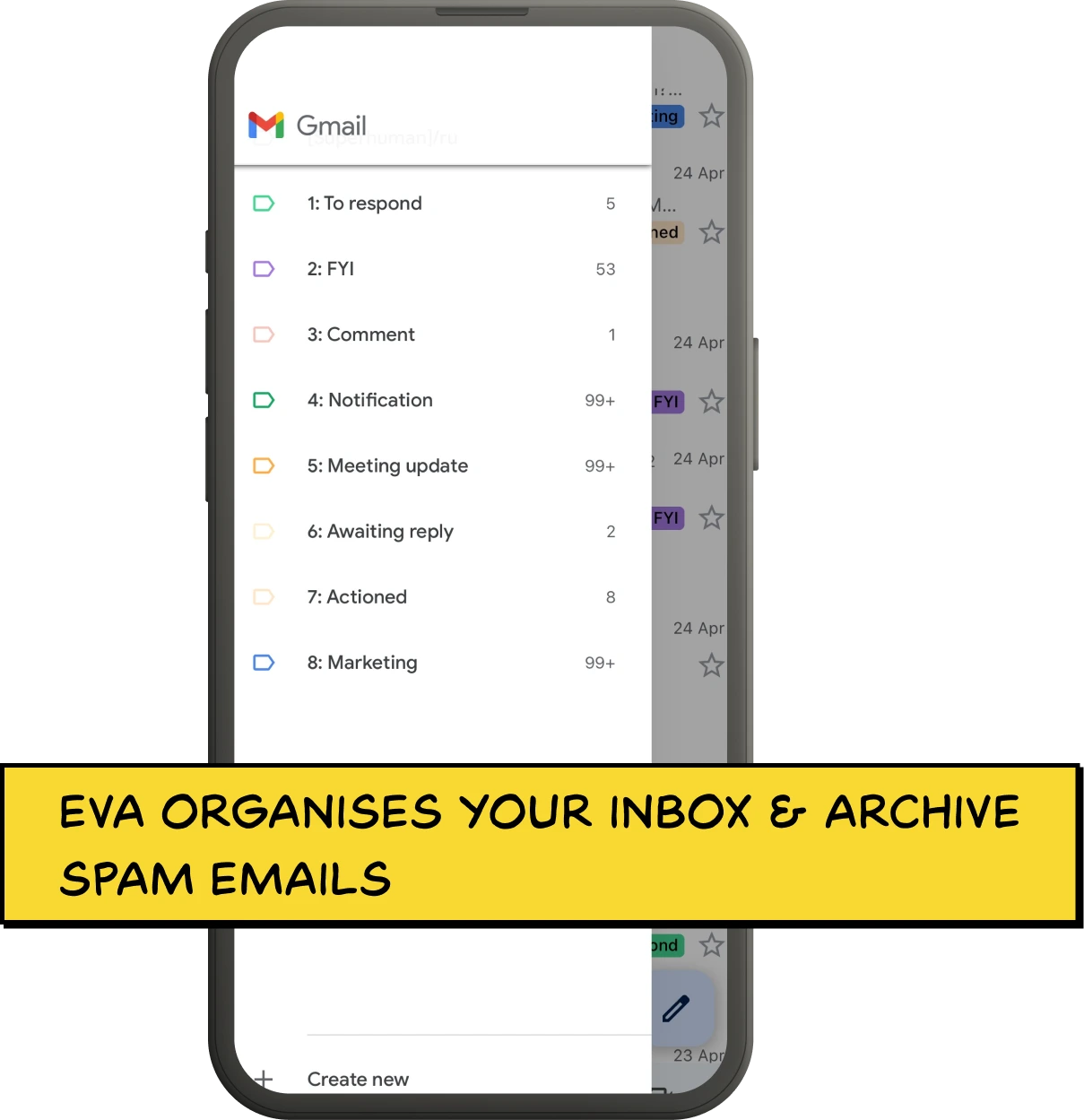
- 24/7/365: While you’re dreaming of your next big feature, Eva is drafting replies and archiving spam so you wake up to a clean slate.
The Financial No-Brainer
Let’s look at the numbers. The cost of a human EA in the US is roughly $65,000 to $125,000 annually. Even if you go the offshore virtual assistant (VA) route, you’re looking at $2,000–$4,000 a month for someone who is in a different time zone and potentially struggling with language barriers.
An ai employee like Eva costs a fraction of that. We’re talking about the price of a few fancy lattes per month versus the price of a mid-sized sedan.
| Feature | Human Executive Assistant | Traditional AI Bot (ChatGPT) | Marblism (Eva) |
|---|---|---|---|
| Annual Cost | $65,000+ | $240+ (Plus your time) | Affordable Subscription |
| Availability | 40 hours/week | 24/7 (But requires prompts) | 24/7 (Autonomous) |
| Onboarding | 2-4 Weeks | Endless Prompting | Instant |
| Management | High (1:1s, feedback) | Manual (You do the work) | Zero (She just works) |
| Mistakes | Human error/Fatigue | "Hallucinations" | Refined Business Logic |
Are You Ready for an AI Staff?
Not every founder is ready to let go of the reins. Some people love the drama of a messy inbox (we call those people "masochists"). But if you're a founder who values their time more than their ego, it’s time to check the boxes.
You need an ai executive assistant if:
- You spend more than 2 hours a day in your inbox.
- You’ve ever missed a meeting because you forgot to add it to your calendar.
- The thought of "onboarding a new hire" makes you want to hide under your desk.
- You find yourself saying "I'll get to that later" to potential revenue-generating leads.
- You want to scale your business without scaling your payroll.
"In the age of AI, the most successful founders will be those who can orchestrate a symphony of digital employees while they focus on high-level strategy."
The "Marblism Way": No Prompting, Just Results
The biggest barrier to AI adoption has always been the "Blank Box Syndrome." You open a tool like ChatGPT, and you have to think: "Okay, how do I phrase this so it doesn't sound like a robot but also gets the point across?"
That's not an assistant; that’s a chore.
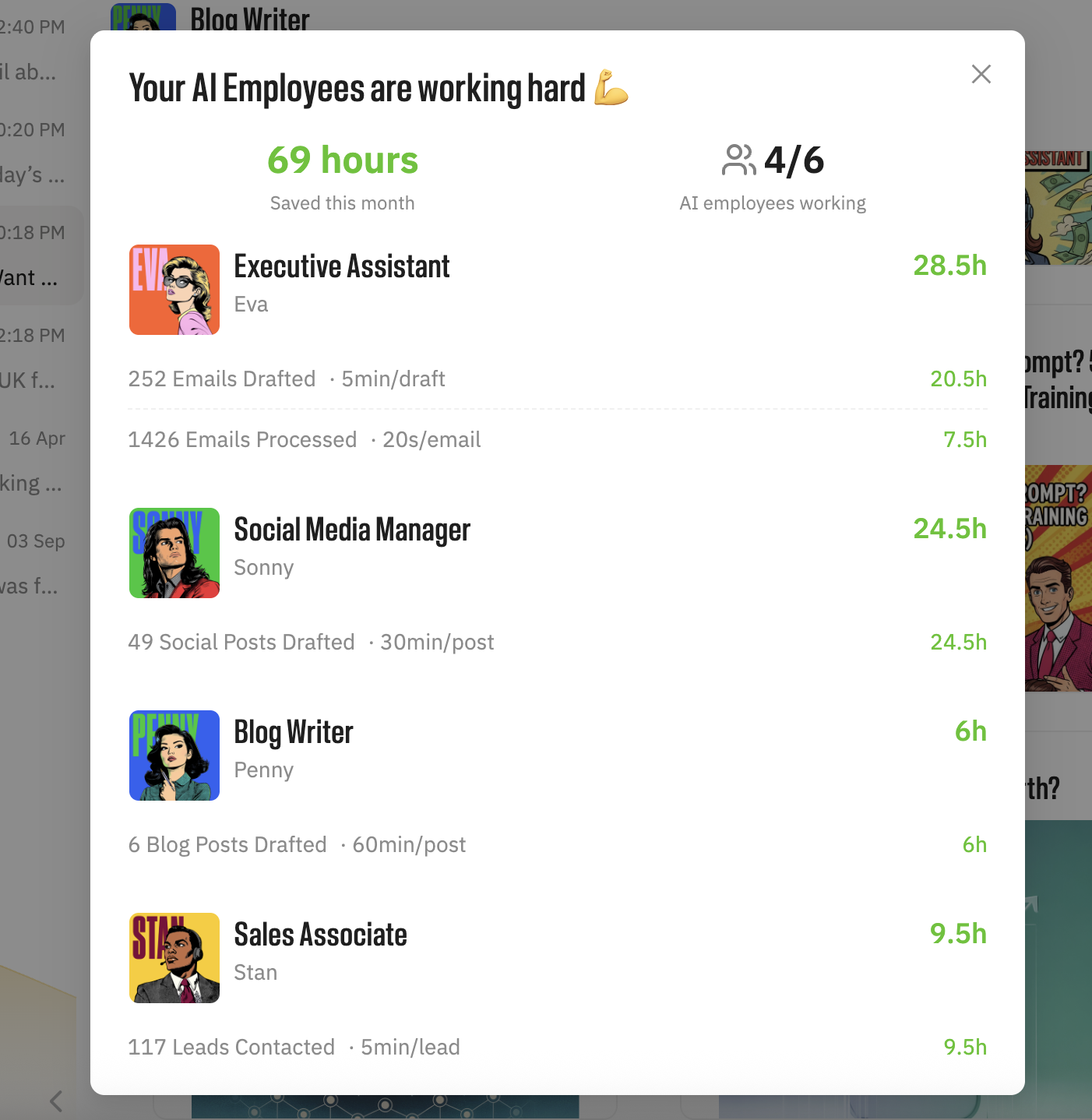
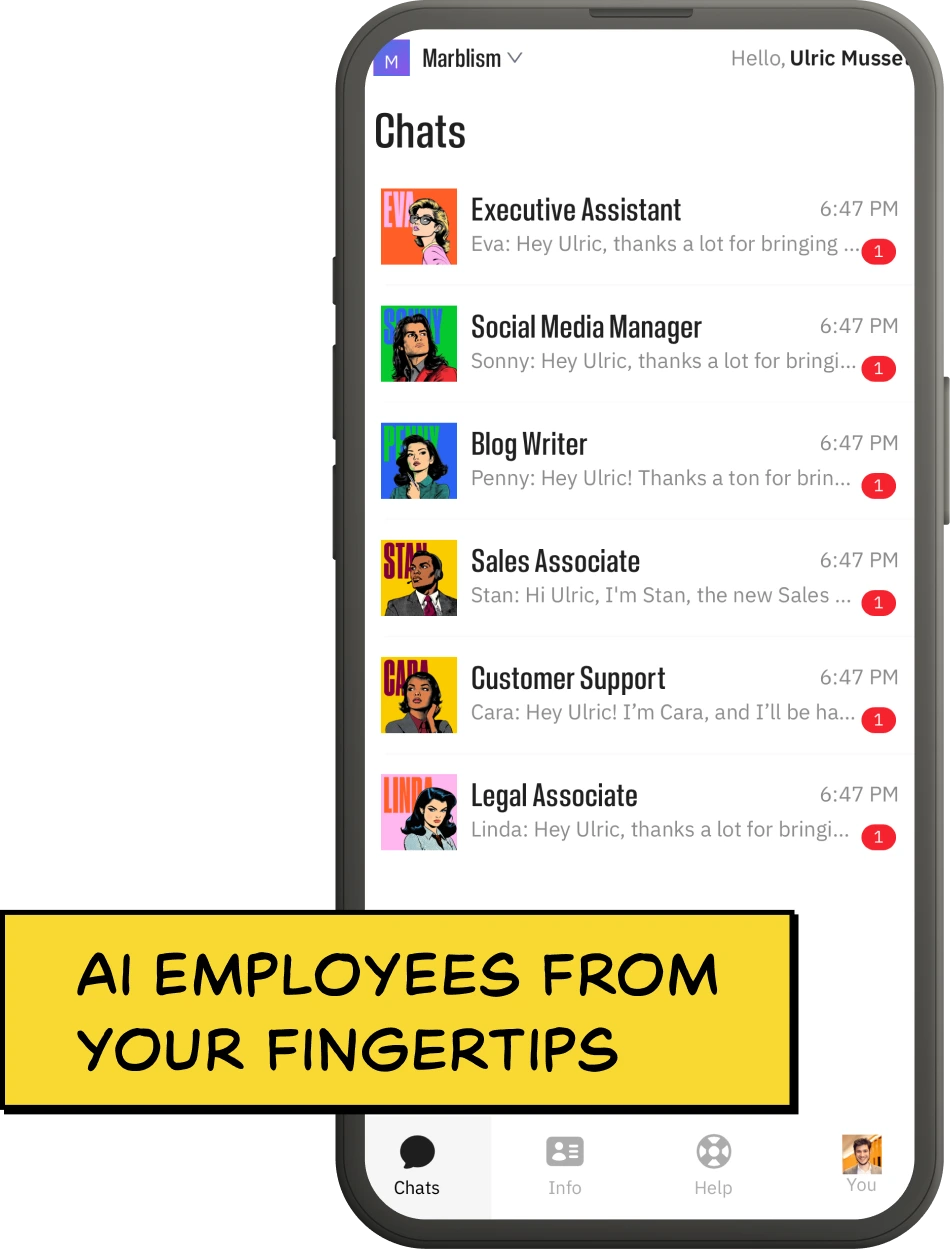
At Marblism, we built our ai staff to be different. Whether it’s Eva handling your schedule, Sonny managing your LinkedIn presence, or Penny drafting your blog posts, the interface is always the same: a simple chat.
You don't need to be a "Prompt Engineer." You just need to be a boss. If you can send a WhatsApp message, you can manage a team of AI employees. It’s that simple.
Beyond the Inbox: The Multiplier Effect
Replacing a traditional assistant with an ai executive assistant is just the gateway drug. Once founders realize that Eva can handle the administrative "drudge work," they start looking at other areas of their business that are leaking time.
- Sales: Instead of manually following up with leads, they bring in Stan, the AI Sales Rep, to handle the outreach.
- Marketing: Instead of staring at a blank Google Doc, they let Penny write the first draft of their long-form content.
- Social Media: Instead of forgetting to post on LinkedIn for three weeks, they let Sonny keep the brand alive.
This is how a single founder manages to out-produce a ten-person agency. They aren't working harder; they just have a more efficient digital workforce.

Why 2026 is the Tipping Point
We’ve moved past the "experimental" phase of AI. In 2026, using an ai staff isn't a competitive advantage; it’s a survival requirement. The founders who are still insisting on "human-only" support are the same ones who insisted on using fax machines in the 90s.
The speed of business has accelerated. If a lead emails you at 3 AM, they don't want a response at 9 AM when your human assistant logs in. They want a response now. Eva ai assistant gives you that "always-on" presence that makes you look like a massive enterprise, even if you’re actually just working from your couch in your sweatpants.
"Reliability is the new currency. AI doesn't have 'off' days, it doesn't get 'burnt out,' and it never forgets a follow-up."
Does This Sound Familiar?
If you’re still hesitant, ask yourself: what is your time actually worth? If you value your time at $100/hour (which is low for a founder), and you spend 10 hours a week on admin, you are literally throwing away $1,000 a week. Over a year, that’s $52,000 in lost productivity.
By replacing those manual tasks with an ai executive assistant, you aren't just saving money; you’re buying back your freedom. You’re buying the ability to go for a walk, spend time with your family, or actually work on the "big picture" ideas that made you start your company in the first place.
The Final Verdict
The era of the $80k-a-year assistant who mainly manages your calendar is over. The future belongs to the automated founder. With eva ai assistant and the rest of the Marblism team, you can build a powerhouse company without the headache of traditional management.
Ready to stop being your own assistant? It’s time to hire your first ai employee. The inbox isn't going to clear itself, and let’s be honest: you have better things to do.
Stay happy, stay hungry, and let the AI do the heavy lifting.
~ Jesus Malo Marblism Partner


