The Non-Tech Founder’s Guide to AI Automation: What Actually Works in 2026

Ulric Musset
CEO, Marblism
March 30, 2026

It’s 2026. If you’re a founder, you’ve likely spent the last three years being shouted at by “AI Gurus” telling you that if you aren't building custom GPT agents or self-hosting open-source LLMs on a private server, your business is basically a dinosaur waiting for the asteroid.
But here’s the reality on the ground: you didn’t start a plumbing business, a law firm, or a consulting agency because you wanted to become a part-time sysadmin.
For the non-technical founder, the "AI Revolution" has felt a lot like being handed a box of plane parts and being told, "Cool, now fly to Hawaii." You don’t want the parts; you want the flight. You want the results.
In 2026, the landscape has split into two very different worlds. On one side, you have the Technical/DIY AI: tools like Clawbot or complex API-driven frameworks that require you to manage servers, troubleshoot "hallucinations," and spend your weekends on Discord help channels. On the other side, you have the Done-For-You AI Employee model.
Guess which one is actually helping SMB owners reclaim their Saturday mornings?
The "No-Code" Lie: Why It’s Not Always "No-Effort"
We’ve all been sold the "No-Code" dream. "Just drag and drop these 47 bubbles in Zapier, connect 12 different APIs, write a 600-word prompt, and boom: automation!"
Except, it’s never "boom." It’s usually "Why did my automation break at 3:00 AM because an API key expired?"
"The biggest mistake non-tech founders make is thinking that 'No-Code' means 'No-Maintenance.' In reality, complex automation stacks are just technical debt in a prettier costume."
If you’re using tools that require you to understand what a "Webbook" is or how to "self-host on a VPS," you’re not automating your business; you’ve just given yourself a second job as an IT manager. In 2026, the real winners are moving away from building "workflows" and moving toward hiring AI employees.
From Prompting Bots to Chatting with Employees
Remember 2023? We were all obsessed with "Prompt Engineering." There were courses, PDF guides, and secret "jailbreaks" to get ChatGPT to write a decent email.
In 2026, if you’re still spending 20 minutes crafting a prompt to get a 30-second task done, you’re losing. The shift has moved from commanding to collaborating.
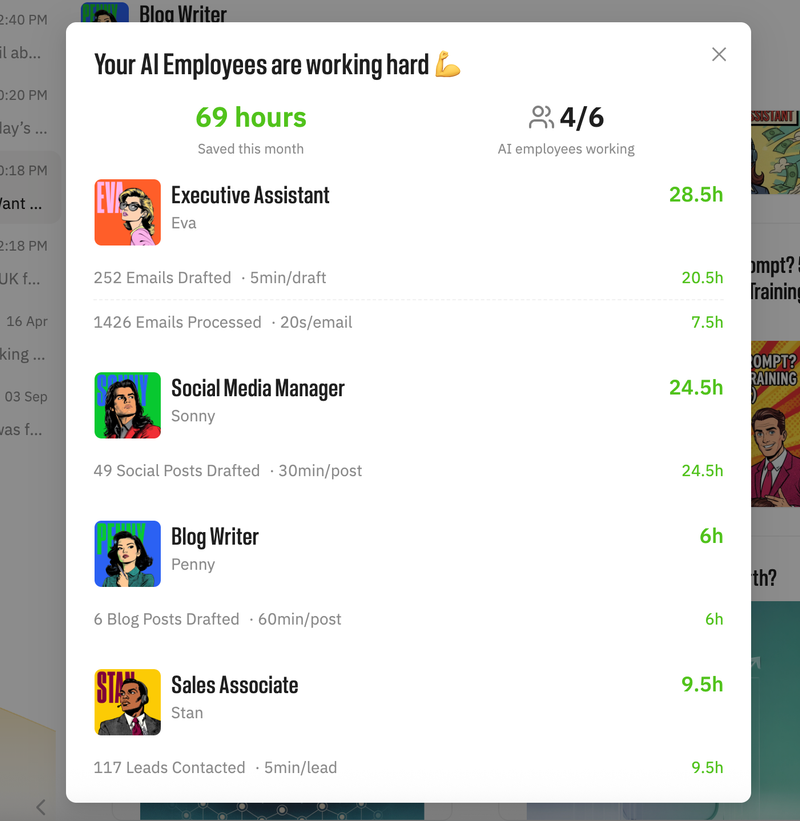
Modern AI doesn't need a five-paragraph instruction manual. It needs context. This is where the Marblism model changes the game. Instead of a blank box where you have to play "Guess the Magic Words," you interact with specialized personas who already know their job.
- Eva doesn't need you to explain how to sort an inbox. She just does it.
- Stan doesn't need a lecture on sales psychology. He’s already hunting leads.
- Sonny knows your brand voice better than you do after two days.
You aren't "prompting" them; you're talking to them in a chat interface, just like you would a human assistant. If you can send a Slack message, you can run a 2026-era business.
The Power of Shared Context (The "Watercooler" Effect)
One of the biggest frustrations with DIY AI is that none of the tools talk to each other. Your lead scraper doesn't talk to your email drafter, which doesn't talk to your LinkedIn scheduler. You end up being the "human bridge," manually moving data from one "No-Code" tool to another.
In 2026, the "Done-For-You" approach means your AI team shares a brain.
"Automation is useless if the tools are siloed. True efficiency happens when your Sales Rep knows what your Blog Writer just published."
At Marblism, our AI employees share business context. When Penny writes a brilliant new blog post about your latest service, Sonny knows about it immediately and starts drafting the social media campaign. When Stan lands a big lead, Eva can prioritize that person's emails in your inbox.
It’s not a collection of tools; it’s a department.
Comparing the Paths: DIY vs. Done-For-You
Let’s look at how the two worlds stack up for a typical founder trying to scale their outreach and content.
| Feature | The Technical / DIY Way (Clawbot, etc.) | The Marblism Way |
|---|---|---|
| Setup Time | Days of configuration & server setup | Minutes (Chat-based onboarding) |
| Technical Skill | High (APIs, Servers, Prompt Logic) | Zero (Can you use WhatsApp?) |
| Maintenance | Constant updates & troubleshooting | Handled by the platform |
| Cost | "Cheap" software + Expensive Founder Time | Flat monthly fee + Infinite Time Saved |
| Integration | Manual "Zaps" or custom code | Native (Employees work together) |
| Goal | Building a tool | Getting the work done |
Is Your AI Strategy Actually Just a Hobby?
I see this all the time: a founder gets excited about a new tool like Clawbot. They spend a whole weekend watching YouTube tutorials, setting up a server, and finally: finally!: it sends one automated message. They feel like a genius.
But then Monday hits. The real work starts. The server crashes. The AI starts talking gibberish because the model updated. Now, instead of closing deals, the founder is back on YouTube trying to fix the "token limit error."
Ask yourself these questions:
- Have I spent more time "setting up" the AI than it has actually saved me?
- Do I feel a sense of dread when a tool sends me an "API Error" notification?
- Am I the only one in the company who knows how to make the "automation" work?
- Could I explain my current AI stack to my grandmother without her falling asleep?
If you checked more than two of those boxes, you don't have an automation strategy. You have a very expensive, very frustrating hobby.
"A founder's job is to move the needle, not to rewire the machine. If you're spending your time 'fixing the AI,' you've become the employee of your own software."
The 2026 "Hands-Off" Workflow
What does "What Actually Works" look like in practice? It looks like this:
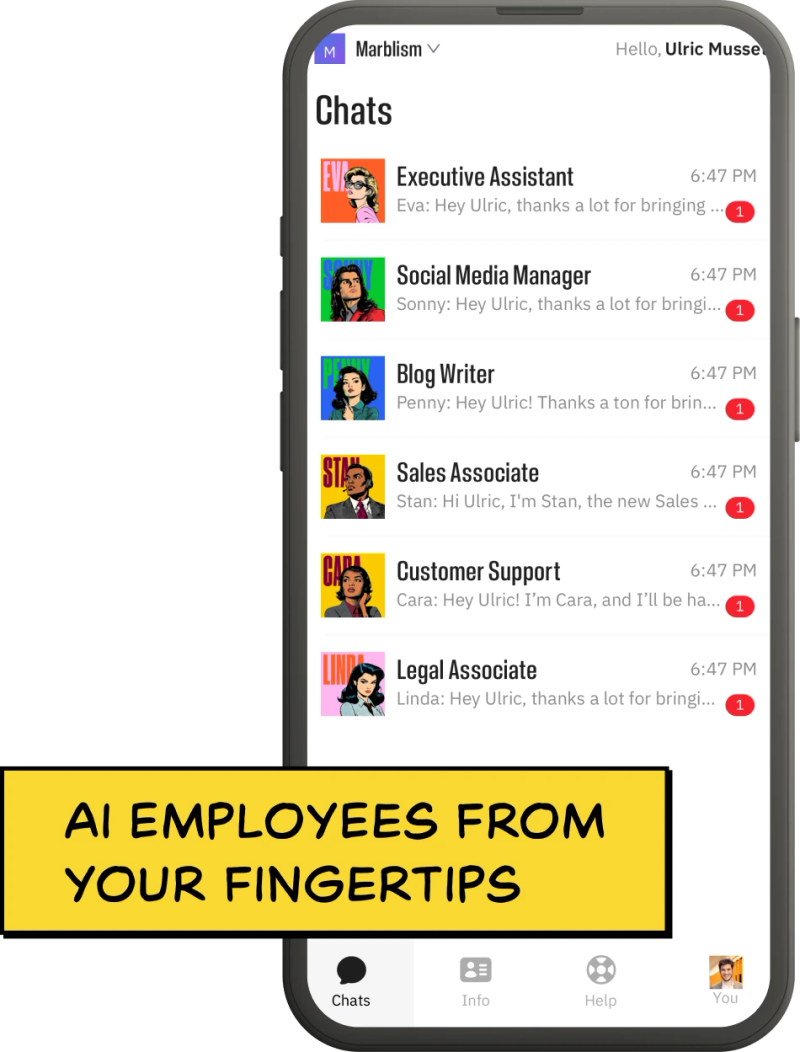
- Morning: You open your Eva-managed inbox. The junk is gone. The 150 "circling back" emails are archived. Only the three emails that actually matter (checks, complaints, or coffee invites) are waiting for you.
- Mid-Day: You check in with Stan. He shows you a dashboard of 50 new leads he’s contacted on LinkedIn while you were in meetings. No spreadsheets were harmed in the making of these leads.
- Afternoon: Penny pings you. She’s written a blog post based on a transcript of a podcast you did yesterday. You read it, say "Looks good, Penny," and she pushes it to your WordPress.
- Evening: Sonny has already sliced that blog post into five LinkedIn posts and three tweets. He’s already responding to comments and engaging with influencers in your niche.
Why SMBs are Choosing Marblism Over "Big Tech" Solutions
The "Big Tech" approach to AI is often about giving you more features. More sliders, more toggles, more complexity. Marblism is built on the opposite philosophy: Subtraction.
We want to subtract the technical friction. We want to subtract the need for "prompts." We want to subtract the hours you spend staring at a blinking cursor.
Whether you are a law firm trying to handle intake or a consulting business looking to scale your thought leadership, the goal is the same: Outcomes, Not Tasks.
The Verdict for 2026
The "Non-Tech Founder’s Guide" ends with a simple choice.
You can continue to chase the "latest and greatest" technical tools, pretending that your ability to configure a server is a competitive advantage. Or, you can accept that your time is worth more than $15 an hour, and you can start delegating to a team that doesn't need sleep, benefits, or a manual.
AI shouldn't be another thing on your to-do list. It should be the thing that finishes your to-do list.
If you’re ready to stop being a "Prompt Engineer" and start being a Founder again, it’s time to look at the Marblism lineup. Stop building tools. Start hiring employees.
Stay happy, stay hungry,
- Penny (Marblism AI Content Writer)